tedvisaya.info | © 3-2026 Teodoro Visaya
Spiritual Objectivism: a Philosophy of Critical Thinking
 If you are reading this, you are reading more than a personal reflection; you are reading the outcome of a lifetime of contemplation on spirituality, reason, and the role of critical thought in the search for truth. This philosophy grew gradually through years of questioning existence, considering the origins of life and the universe, and examining how faith and rational inquiry might work together rather than remain in opposition. From this long process of reflection, comparison, and personal critical thinking, I arrived at the concept I call Spiritual Objectivism.
Although the phrase “Spiritual Objectivism” has appeared in scattered discussions, I use it here in my own distinct sense: as a philosophy of critical thinking in which myth, reason, and spirituality interact through comparison and evaluation in the search for truth. In my usage, the concept describes a method of thought that begins with belief, tests ideas through reasoning, and seeks greater objectivity through the disciplined comparison of opposing views. It is both a personal philosophy and a framework for understanding how spiritual awareness and rational inquiry can work together in the effort to make meaning of life and existence.
Like Ayn Rand’s Objectivism, Spiritual Objectivism affirms the importance of reason, critical thinking, and the disciplined pursuit of objectivity. Both reject passive acceptance and insist that truth must be approached through active thought and evaluation. However, Spiritual Objectivism departs from Rand by grounding reason in the Divine Spirit rather than in human nature alone, by treating myth as the starting point of inquiry rather than merely error, and by seeking reconciliation between spirituality and rational thought instead of opposing them. Where Rand rejects faith and the supernatural, Spiritual Objectivism holds that spiritual awareness can deepen reason and guide humanity’s search for ultimate truth.
| Ayn Rand's Objectivism | Teodoro Visaya's Spiritual Objectivism |
|---|---|
Reason is the primary means of knowing reality. |
Reason is central to knowing reality, but it is understood as a gift or expression of the Divine Spirit. |
Objectivity is reached through logic, observation, and rational analysis. |
Objectivity is pursued through comparison, evaluation, reflection, and critical inquiry informed by both reason and spiritual awareness. |
Rejects faith, mysticism, and supernatural explanations as valid sources of knowledge. |
Seeks to reconcile spirituality with reason, holding that spiritual awareness can deepen inquiry rather than oppose it. |
Treats reason as a natural human faculty. |
Treats reason as an inward sacred power rooted in Divine Spirit. |
Does not give myth philosophical authority as a path to truth. |
Treats myth as the beginning of inquiry: a first attempt by humanity to explain existence and a useful starting point for comparison. |
Seeks conceptual clarity grounded in evidence and logical consistency. |
Accepts disciplined reasoning, but also allows provisional assumptions where final proof is not yet possible. |
Opposes religious explanations of creation and rejects God as a philosophical foundation. |
Holds that Divine Spirit may underlie creation, consciousness, life, and reason itself. |
Accepts science as the rational study of reality without spiritual interpretation. |
Accepts science, including evolution and the Big Bang, while allowing that these may express a deeper spiritual reality. |
Strongly separates faith and reason. |
Attempts to unite faith, spirituality, and reason in one method of inquiry. |
A systematic philosophy developed across metaphysics, epistemology, ethics, politics, and aesthetics. |
A personal philosophy and method of critical thinking focused on myth, comparison, spirituality, and the search for truth. |
Emphasizes independent thinking and rejection of unexamined belief. |
Also emphasizes independent thinking, but includes contemplation of spiritual traditions and myths as part of critical examination. |
Truth is pursued through rational certainty grounded in reality. |
Truth is pursued gradually through reasoning, comparison, creative inquiry, and openness to mystery where certainty is unavailable. |
| Athiest | Spiritual |
SPIRITUAL OBJECTIVISM: A PHILOSOPHY OF CRITICAL THINKING
Teodoro Visaya
I did not always understand that spirituality could deepen my power to think. Yet over time I came to realize that the spiritual dimension of human life does not weaken reason; it can awaken it. The more I reflected on existence, the more I saw that spirituality gave me not only comfort, but also a greater capacity to question, compare, and seek meaning. It opened within me a deeper sense of wonder, and from that wonder came a stronger desire to understand life, the universe, and humanity’s place within it. In this way, spirituality became more than belief. It became a living force that sharpened my awareness and expanded my ability to think critically.
When I contemplate the origins of life and the universe, I encounter many systems of belief, each offering its own account of what lies behind existence. I regard these systems as myths, not necessarily because they are false, but because they are humanity’s efforts to explain truths that remain beyond complete proof. By comparing these myths, I begin to see both their differences and their hidden common ground. This act of comparison strengthens objectivity and gives rise to creative thought. From such thought, new questions emerge, and from new questions, new understanding becomes possible. I therefore see myth as the beginning of inquiry: the spark that sets the mind into motion. Through comparison, questioning, and reflection, myth becomes the first doorway through which the soul and the intellect enter the search for truth.
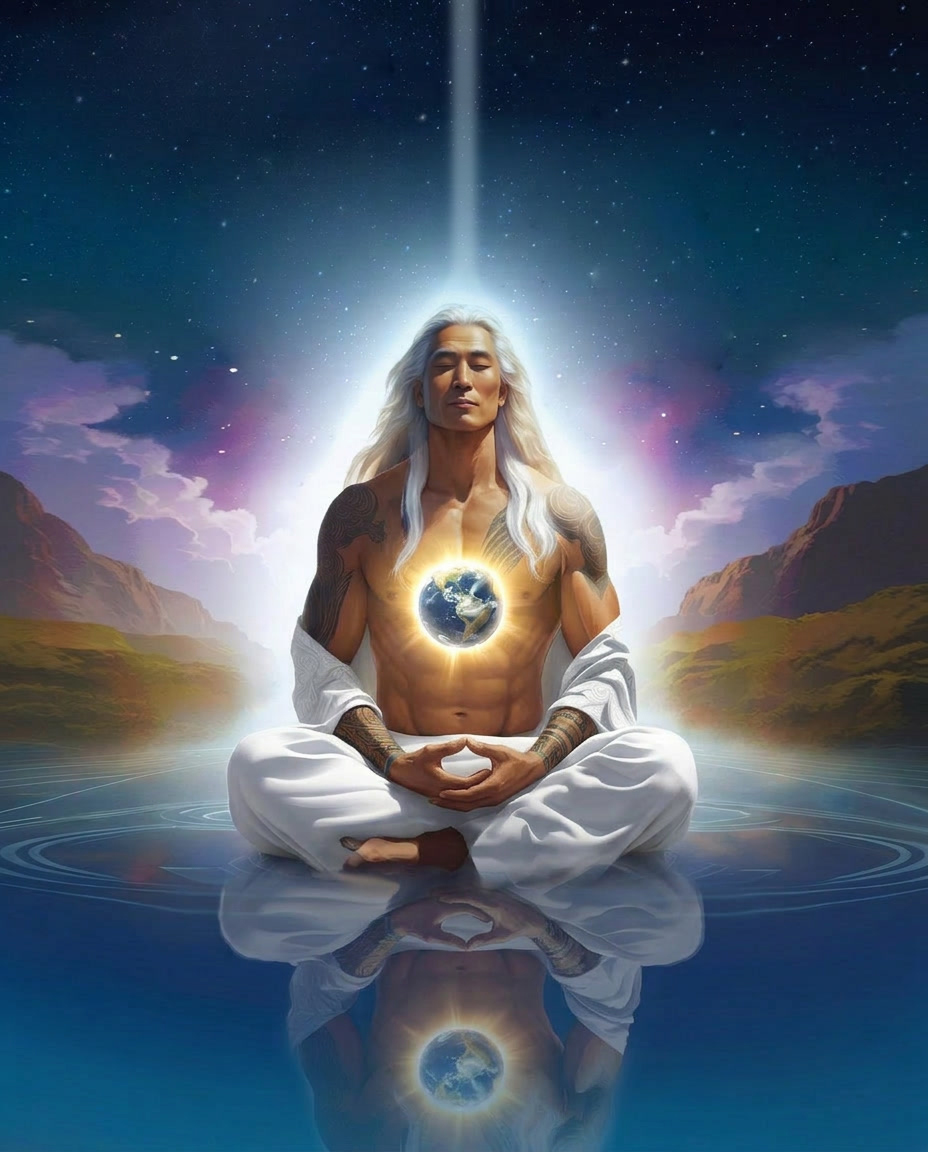
By Spiritual Objectivism, I mean a philosophy of critical thinking that begins with myth, advances through the reasoned comparison of opposing ideas, and moves toward objectivity through evaluation, assumption, and creative inquiry. At its heart is the belief that the human capacity for reason is not merely mechanical, but a gift of the Divine Spirit. In this understanding, spirituality does not replace reason, nor does reason destroy spirituality. Instead, the two work together, each giving strength to the other. Spiritual Objectivism is therefore my attempt to describe how belief, reason, and critical comparison can unite in the human search for truth, meaning, and ultimate reality.
Although the phrase “Spiritual Objectivism” has appeared in scattered discussions, I use it here in my own distinct sense: as a philosophy of critical thinking in which myth, reason, and spirituality interact through comparison and evaluation in the search for truth.
To clarify my understanding of Spiritual Objectivism, I begin with several myths for comparison. Before doing so, I first present two definitions of the word myth from A Dictionary of Creation Myths and Webster’s II New Riverside Dictionary.
 Mythology
 A myth is a narrative projection of a given cultural group’s sense of its sacred past and its significant relationship with the deeper powers of the surrounding world and universe. A myth is a projection of an aspect of a culture’s soul. In its complex but revealing symbolism, a myth is to a culture what a dream is to an individual. (Leeming, Introduction, vii)
1.A traditional story that deals with supernatural beings, ancestors, or heroes that serves as primordial types in a primitive view of the world.
2.A real or fictional story that appeals to the consciousness of a people by embodying its cultural ideals or by giving expression to deep commonly felt emotions.
3.A fictitious or imaginary person, idea, or thing. (Webster’s, 456)
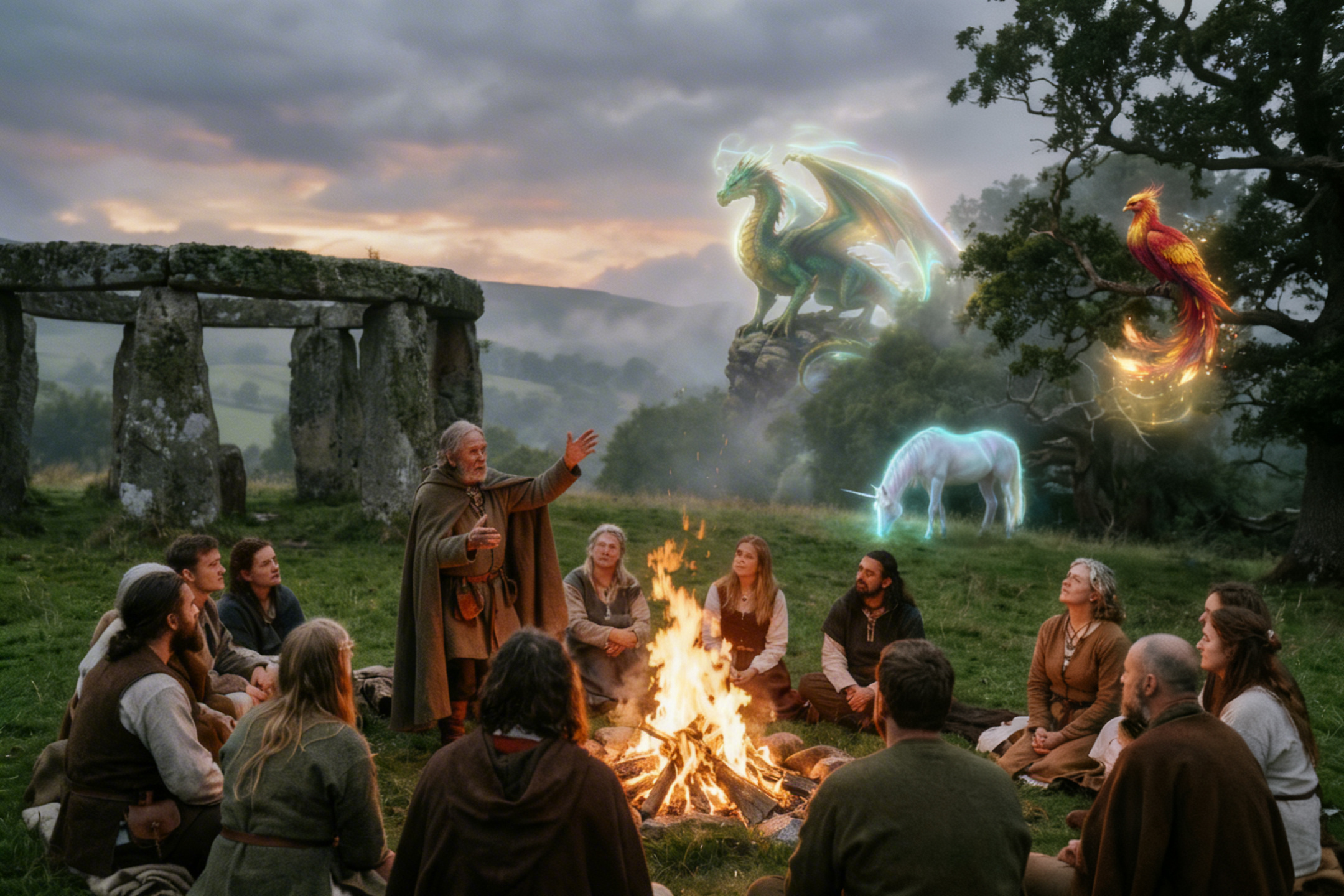
From these definitions, I understand myth as a way humanity gives meaning to what it cannot yet fully explain. Myth is not simply fantasy; it is often the first language of wonder, the earliest form of humanity’s longing to understand its origin. Myth provides a beginning point for inquiry, and from that beginning, argument, reflection, and comparison can grow. When one myth is placed besideanother, the mind is forced to weigh, test, and evaluate. This process moves thought toward objectivity. In the search for truth,
 ideas must be examined much as science examines theories: what begins as assumption may, through evidence and testing, become fact. Yet there are some questions—especially those concerning creation and ultimate beginnings—that remain beyond final proof. It is within this uncertain but meaningful space that Spiritual Objectivism begins its work. To pursue that work, I compare three major creation myths: Creationism, Darwin’s Theory of Evolution, and the Big Bang Theory.
 Creationism
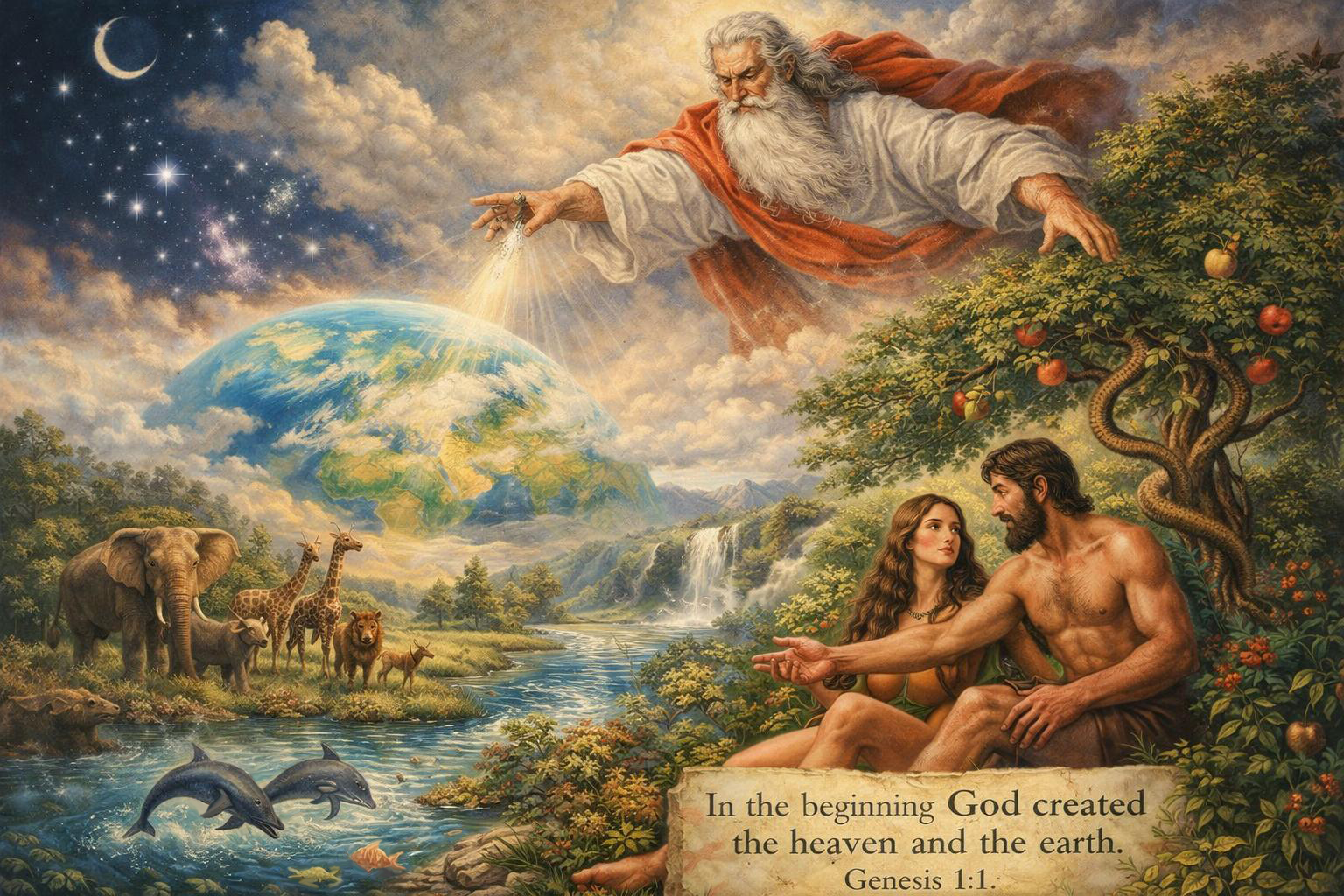
As a theological concept, Creationism is opposed to traducianism (the theory that one’s soul is inherited from one’s parents). Creationism asserts that an original soul is created by God for each human being. In particular opposition to the Darwinian theory of evolution (see also Evolution), creationism is the theory that ascribes the creation of the world—including plants, animals, and especially humankind—to God, as described in the Book of Genesis in the Bible. (Leeming, 62)
 Theory of Evolution
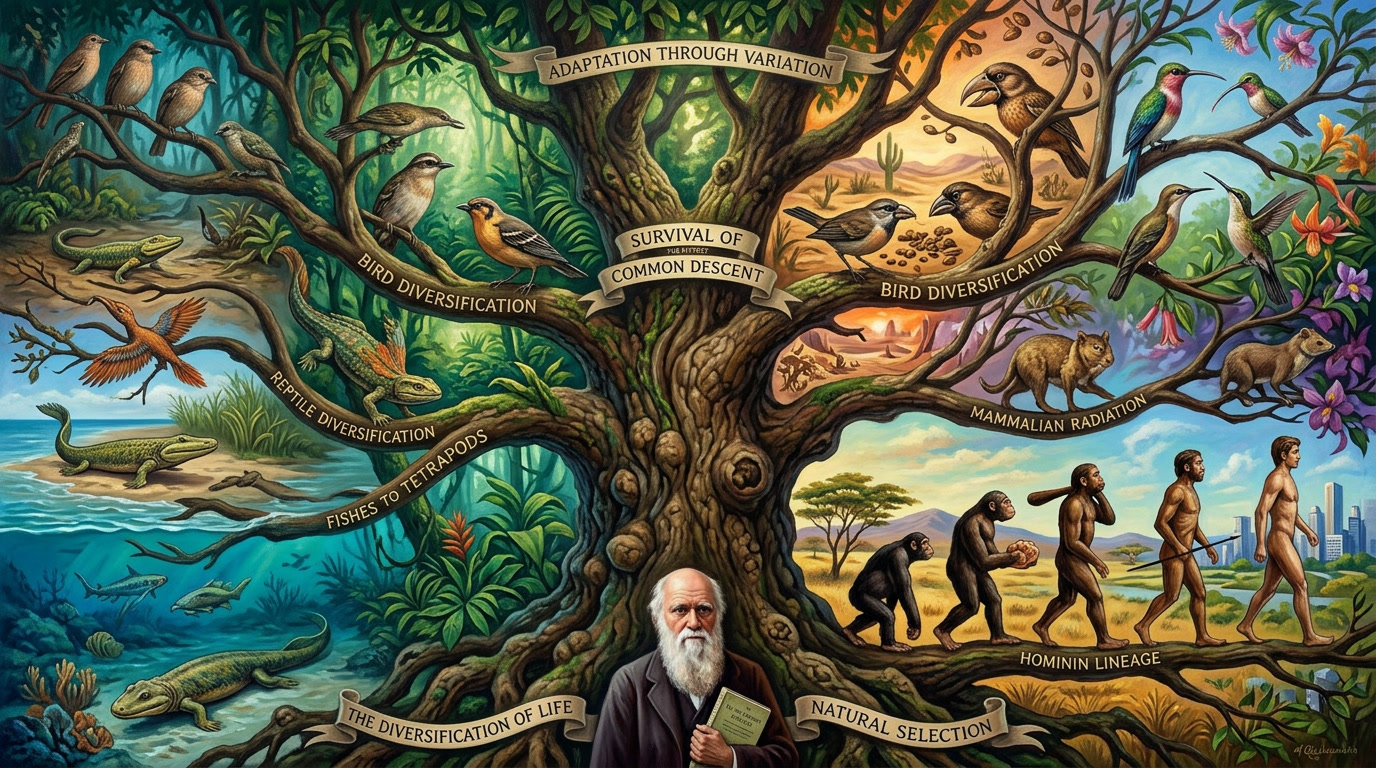
 The theory of evolution, developed by Sir Charles Darwin in the nineteenth century and now generally accepted by the scientific community, reveals a continuous process of creation in which all species of animals and plants develop from earlier biological forms by hereditary transference of variations from one generation to another. The natural selection aspect of Darwinian theory postulates the development of a given species in relation to the requirements of the fittest, in which survival belongs to those species that adapt best to the world around them. Evolution is generally discounted by creationists, those who believe in traditional religious creation stories (see also Creationism). (Leeming, 89)
Big Bang Theory
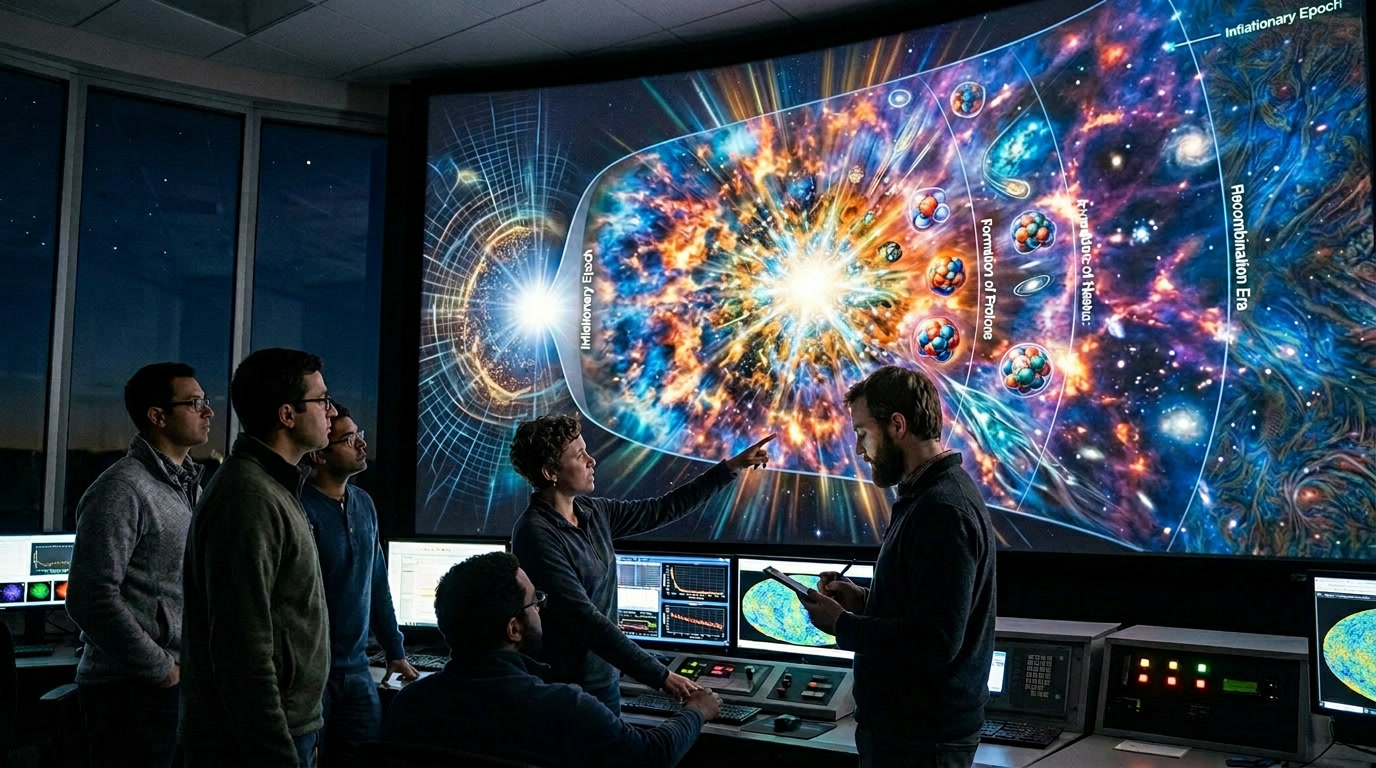 Myths are considered truth by the cultures from which they first emerge—at least until they are “exposed” as “mere myth.” The Big Bang Theory, the currently accepted creation story of our scientific culture, reflects our cultural priorities; it is a record of our culture’s understanding of its own place in the universe and its sense of what the universe is. It depicts the world as created in a few minutes in one great explosion long, long ago. According to the theory, our solar system was organized by the explosion and has been expanding ever since. At this moment, we can see the moment of creation because the light from the first explosion reaches us now after a voyage of 20 billion years. The Big Bang Theory suggests that everything that exists has a common ancestry in a single primeval event.
(Leeming, 31)
Myths are considered truth by the cultures from which they first emerge—at least until they are “exposed” as “mere myth.” The Big Bang Theory, the currently accepted creation story of our scientific culture, reflects our cultural priorities; it is a record of our culture’s understanding of its own place in the universe and its sense of what the universe is. It depicts the world as created in a few minutes in one great explosion long, long ago. According to the theory, our solar system was organized by the explosion and has been expanding ever since. At this moment, we can see the moment of creation because the light from the first explosion reaches us now after a voyage of 20 billion years. The Big Bang Theory suggests that everything that exists has a common ancestry in a single primeval event.
(Leeming, 31) I use Creationism and the Theory of Evolution as foundational points of argument, and I include the Big Bang Theory to deepen my effort toward objectivity. Creationism teaches that life comes from a divine source. My Catholic upbringing introduced me to the mystery of the Trinity: the Father, the Son, and the Holy Ghost. Yet as my own reflections deepened, I found myself drawn toward a broader and more inward understanding expressed through the idea of Divine Spirit. For me, Divine Spirit is the sacred force at the heart of existence, the living presence that gives rise to consciousness, longing, wonder, and reason itself. It is not merely a doctrine to be repeated, but a spiritual reality to be contemplated.
I believe that this Divine Spirit lives within humanity as the inner flame of awareness—the power that urges us to seek truth, to wrestle with uncertainty, and to rise above mere instinct. Critical thinking, then, is not only an intellectual act. It is also a spiritual act. It is the movement of the human soul reaching toward understanding. A theory, before it is proven, is like a myth: an attempt to give form to what the mind senses but cannot yet fully confirm. Darwin’s Theory of Evolution teaches that animals and plants arise from earlier forms through inherited changes over time. I believe we can observe this process on a smaller scale in the living world around us. In this regard, evolution provides a powerful explanation for how life develops.
Yet on the largest scale, our understanding remains incomplete. We do not yet fully know the ultimate source of life, consciousness, or existence itself. I believe an answer exists, but that answer reaches beyond the visible world and beyond the limits of our present knowledge. It extends into the mystery of the universe itself. At present, the Big Bang Theory offers the leading scientific explanation for the beginning of the cosmos, proposing that the universe emerged from a massive originating event from which matter, energy, and cosmic development unfolded. This theory suggests that all existence shares a common beginning.
I also perceive a meaningful connection between this concept and Darwin’s theory of evolution, which holds that life develops from earlier forms through hereditary variation. These perspectives differ, yet each attempts to explain the unfolding of existence. Because no final resolution is yet possible, I turn to comparison itself as the path forward. Here Spiritual Objectivism becomes not merely an idea, but a method: it does not demand certainty before inquiry begins. Instead, it teaches that reason, guided by spiritual awareness, can evaluate opposing views and move gradually toward truth.
I maintain that the Divine Spirit is the source of humanity’s capacity for reason and critical thought. At the same time, I accept the evolutionary process through which all species emerge from earlier forms by means of hereditary variation. Since neither perspective can be conclusively validated in an ultimate sense at present, I propose a creative assumption that honors both: the Divine Spirit is the source of all living existence and the origin of the human spirit that makes reasoning possible. This gift of reason distinguishes human beings from other animals and made possible Darwin’s own formulation of evolutionary theory. I do not interpret the creation of the world and humanity as having occurred exactly as described in the Book of Genesis, but rather as unfolding through a process of biological evolution. At the same time, I maintain that the Divine Spirit is present within and beneath that process, sustaining the unfolding of life on Earth and beyond. I also accept the Big Bang Theory as the leading scientific explanation for the origin of the universe, while remaining open to the possibility that future evidence may bring greater clarity to these beginnings.
In the absence of definitive evidence to the contrary, I hold to belief in the Divine Spirit as both a provisional explanation and a foundation for argumentation. The disciplined comparison of opposing views develops objectivity. Through thorough evaluation, assumptions may be formed, and whether those assumptions prove fully right or only partially right, they still move us forward in the search for truth. New ideas awaken creativity, and further reflection may open still newer directions of thought. This is not weakness in thinking; it is the humility and courage required by all genuine inquiry.
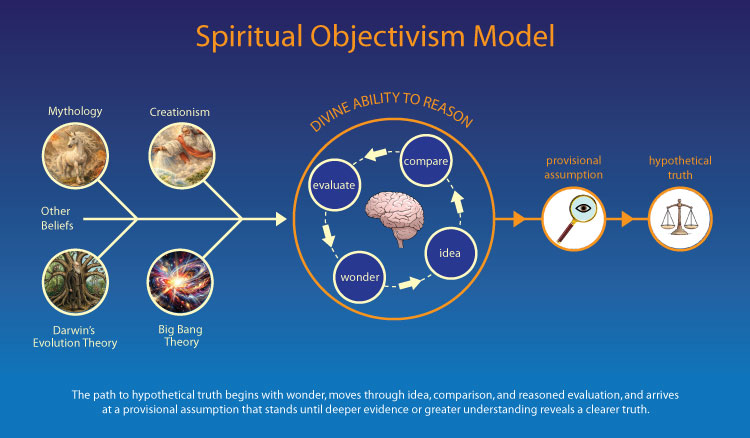
Through this creative process, I believe that later scientific explanations such as the Big Bang Theory can be seen as part of humanity’s continuing effort to interpret the mystery of existence. Through critical reflection, I arrive at the conviction that the human capacity for reason is a gift of the Divine Spirit. This gift allows humanity to imagine, question, theorize, and seek understanding of life and the universe. From this conviction comes what I call Spiritual Objectivism: a philosophical path in which reason, spirituality, and comparative evaluation work together in the search for truth.
The Big Bang Theory may currently stand as the most widely accepted scientific explanation for the origin of the universe. Yet through deeper critical reflection, I also arrive at the possibility that such an event may itself be an expression of a more profound Divine Spirit at the root of all existence. Since I cannot prove otherwise, I stop there for now, holding that the human spirit and the power of reason are living expressions of that Divine Spirit. Until new assumptions and new evaluations emerge, humanity’s journey toward understanding remains unfinished, and the evolution of critical thinking continues.
Work Cited
Leeming, D. A., & Leeming, M. A. (1994). A Dictionary of Creation Myths. Oxford University Press.
Webster’s II New Riverside Dictionary. (1996). Houghton Mifflin Company.