 If you’re reading this, you’re reading a homework assignment where I’m openly “playing with my thoughts” in a serious way—testing them, turning them over, and seeing what holds. The subject is spirituality: my stance on religion, my developing idea of God, and how I’ve tried to make sense of belief without surrendering my ability to question.
 This isn’t a sermon, and it isn’t a rejection just for the sake of revolt. It’s a personal investigation. I’m writing to map out how I got here, what I’ve accepted, what I’ve let go of, and what still remains unresolved. Along the way, I use the tools in my cognitive toolbox—logic, critical thinking, research, debate, observation, and self-reflection—to move from assumption to evidence, from emotion to clarity, and from inherited answers to earned understanding.
My goal isn’t to “win” an argument with religion. My goal is to arrive at a decision I can live with—one that feels honest, internally consistent, and grounded in both reason and lived experience.
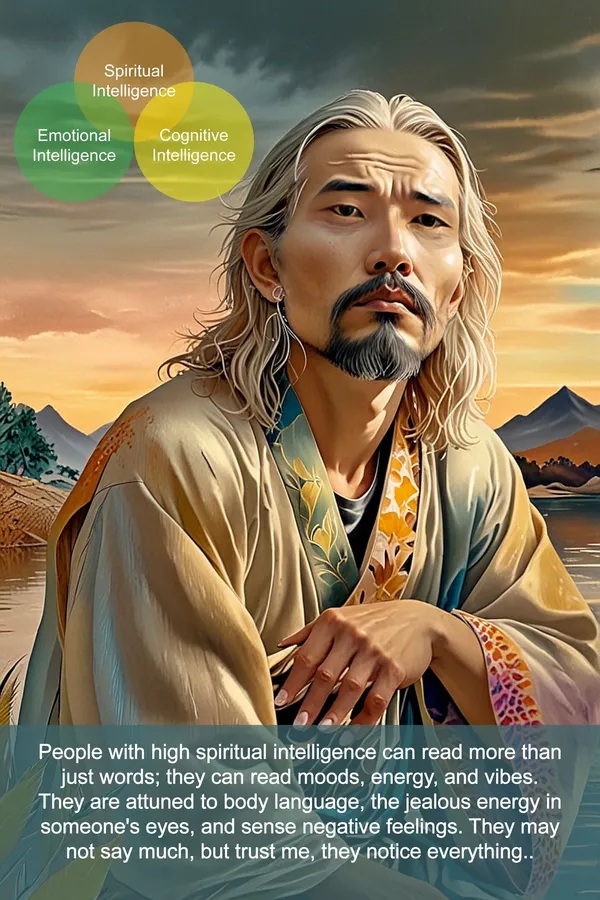 SPIRITUAL INTELLIGENCE
Teodoro Cayobit Visaya
SPIRITUAL INTELLIGENCE
Teodoro Cayobit Visaya
I believe that God is a man-made phenomenon, representing the spiritual, life-giving intelligence within each of us. This human intelligence serves as the foundation for faith and the capacity to reason about spiritual existence. Human reasoning emerges from collective debates and arguments, reflecting humanity's intrinsic capacity for wonder. The origin of this capacity remains open to debate, a question I aim to address through reason. I refer to this phenomenon as Intelligent Design.
To begin, let me pinpoint how I have arrived at this way of thinking. As a child growing up in a strong Catholic family and Filipino community, I was taught to pray for my sins. I was just an innocent child; I had not committed any sins, and what religion taught me was how to feel guilty. But why? Is it a control strategy to make people obedient through guilt? Should I feel guilty that the Catholic God sacrificed his only son to erase our sins? Is this guilty obedience a free ticket to Heaven? Does this mean I can commit sins and I will be forgiven if I pray in obedience to the church? Some things just didn’t sit right with me.
Seeking a better life required me to claim my independence beyond the Catholic teachings I was raised with. Even with my parents’ unwavering faith, I couldn’t stop questioning: “If God is truly great, why has my family suffered?” and “If God exists, why hasn’t He heard my prayers—and why must I endure so much pain?”
These doubts led me to recognize a double standard as I began, metaphorically, to read between the lines. I stopped relying on religious explanations and started looking for answers through research and rigorous debate. Along the way, I discovered the scientific method—observation, discovery, theory, and logic—tools for pushing toward a higher horizon of intellect through a continuous cycle of reason, wonder, and argument. Over time, that pursuit of knowledge dissolved the restrictive boundaries religion had placed around my thinking.
I came to accept that I no longer follow Catholic doctrine, yet I still can’t call myself an atheist. What remains is a clear sense of something spiritual within me—not a set of rules or a church, but an inner presence I experience through reason, curiosity, and awe. It’s the life-giving force that keeps me questioning, learning, and pressing forward in the pursuit of truth.
This process begins the way myths and theories often do: with an untested idea—an assumption that seems to appear out of thin air. But it doesn’t end there. That first spark becomes a starting point, something to examine and challenge through reason, quantitative observation, and qualitative exploration until it either holds up or falls apart. In that sense, “myth-based objectivity” describes the move from imaginative conjecture to disciplined discovery—the scientific method turned into a personal practice of finding truth.

To understand myth-based objectivity, I start with a simple question: how do we actually acquire knowledge? For me, the philosophical traditions of Ancient Greece—especially Plato and Aristotle—offer a useful framework.
Plato, the founder of the Academy, argued that knowledge is in some sense already within us, and that learning is a process of discovery or recollection. I interpret this as the spirit’s role in awakening insight: the inner spark that recognizes patterns, asks deeper questions, and senses meaning before it can fully explain it.
Aristotle, Plato’s student and founder of the Lyceum, grounded knowledge in experience—what we observe through the senses and learn through interaction with the world. His view reminds me that insight must be tested, refined, and corrected by reality.
I see merit in both. The spirit may ignite discovery, but the environment disciplines it into understanding. Knowledge, then, is born from the interplay between inner capacities and external influences—each shaping, and being shaped by, our thoughts, spirit, and beliefs as we move toward truth.
And once you accept that knowledge grows from this two-way relationship, a familiar kind of complexity appears: the “chicken or the egg” dilemma, where cause and origin are tangled together. Even within the Plato–Aristotle framework, the same tension shows up. Take sexuality, for example— is it innate, as Plato might suggest, or shaped by experience and environment, as Aristotle would argue? I believe it’s both: an interplay between what is within us and what happens to us.
That same duality shows up in the biggest question of all: where did the universe come from? Some traditions answer with creation narratives, such as the Bible; science offers models like the Big Bang. I tend to see biblical stories as early human efforts to explain what was once unknowable—much like Greek mythology. In the same way Neptune once served as a mythic explanation for the sea’s power, modern sciences like oceanography and marine biology now explain the ocean through observation, measurement, and testable theory.
This shift reflects Aristotle’s emphasis on learning from the environment and aligns with the scientific method: we move from story to hypothesis to evidence. And yet, even with all science has clarified, the ultimate origin of the universe remains an open frontier—explored with ever better tools, but not fully resolved.
Because that frontier is still unresolved, I resist treating any single explanation as final. Until definitive evidence emerges, I maintain that the phenomenon of God is ultimately man-made—and that religion, historically, functioned as a tool for social order, helping civilize cultures away from nomadic, barbaric behavior. Even so, I view the pursuit of knowledge as essential to human progress, while holding that happiness—lived and earned in the present—is life’s primary objective.
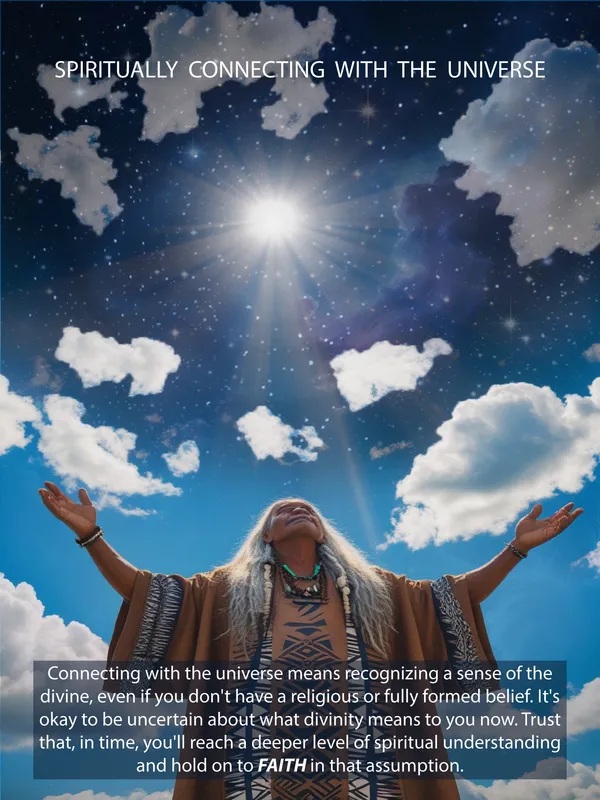 I regard happiness as the central aim of life. Eradicating deadly diseases such as cancer would save lives and increase collective happiness and well-being. Addressing issues like crime, poverty, hunger, and homelessness would further promote happiness and societal harmony. Even resolving existential questions about the universe’s origins could contribute to universal contentment. However, achieving these goals raises questions about the future of our pursuit of knowledge and happiness. It is possible that such fulfillment would bring humanity closer to the divine spirit or signal a new phase of existence. Until then, I believe much progress remains to be made.
So where do I stand now in my beliefs about God and the universe? Since I don’t have real answers, I keep relying on faith—faith that someday the unknown will be known. Maybe that day will come when I die, and then everything will make sense. But when I die, will there be life at another level, or will I be reincarnated? Who knows? I don’t, so I have to go on faith. Faith that someday the ultimate truth will be explained.
The most compelling framework I have encountered for understanding the meaning of life is Objectivism. At present, Objectivism gives me a disciplined method for acquiring knowledge: it prioritizes reason, demands clarity, and insists that beliefs be grounded in reality rather than tradition or emotion. While no philosophy answers every question, I value Objectivism for its intellectual rigor and its insistence that I take responsibility for what I claim to know—and for why I claim it.
Objectivism is a philosophical system developed by novelist and philosopher Ayn Rand. She defines Objectivism in her own words as follows:
My philosophy, in essence, is the concept of man as a heroic being, with his own happiness as the moral purpose of his life, with productive achievement as his noblest activity, and reason as his only absolute. (Binnswanger 343)
I find Rand’s statement powerful and inspiring, yet I also notice what it deliberately leaves out: any reference to God as the source of the universe or as the ultimate purpose of life. Through further study of Objectivism and its intellectual following, I noted that most adherents, including Rand herself, identify as atheists. To me, the complete exclusion of God feels unnecessarily final, because I view the human capacity for reason as more than a biological accident—I experience it as a divine endowment. While humans did not create the universe, I contend that our connection to it is mediated through the spirit, which fuels our drive to understand, to seek meaning, and to pursue truth.
Consequently, I adhere to a personal interpretation of Objectivism, which I term Spiritual Objectivism. This perspective incorporates the principles of Ayn Rand’s philosophy while stressing the spirit as the primary motivating force in individuals. I claim that the capacity for reason is a divine endowment distinguishing humans from animals. While Objectivists celebrate human inventiveness, I question its origin, attributing it to a higher power. I believe that the spirit forms the foundation of humanity, and that understanding ourselves requires knowledge of our origins and nature. In my view, humans are linked in mind, body, and spirit, with the spirit as the ultimate source, as reflected in our spiritual nature. Until presented with convincing evidence to the contrary, I will retain this perspective. The term 'philosophy' derives from Greek words meaning 'love' and 'wisdom,' implying that the search for knowledge is vital to achieving happiness. I equate happiness with love and posit that increased knowledge leads to greater happiness.
Summary
In this essay, I trace how a childhood raised in Catholic tradition led me—not to simple rejection, but to a deeper reconstruction of belief grounded in questioning, evidence, and lived experience. Early religious teachings about sin and guilt sparked doubts about whether faith can become a tool of obedience rather than truth, especially as suffering and unanswered prayers challenged the idea of a responsive, benevolent God. Those doubts pushed me toward research, debate, and the scientific method, where I learned to treat ideas as starting points—myth or hypothesis—tested through reason, observation, and experience. Drawing on Plato and Aristotle, I argue that knowledge forms through an interplay: an inner spiritual spark that ignites discovery and an external world that refines it into understanding. From that lens, I interpret God as a largely man-made concept that still points to something real within us: the life-giving intelligence that produces reason, wonder, and the drive to seek truth. While science replaces many myths, the universe’s ultimate origin remains unresolved, leaving room for humility and faith—not as blind obedience, but as hope that the unknown will someday be understood. Ultimately, I anchor meaning in happiness as life’s primary objective and embrace Objectivism’s commitment to reason and human flourishing, while extending it into my own “Spiritual Objectivism,” which holds that reason itself is a divine endowment and that the pursuit of wisdom—love of truth—deepens love, enlarges happiness, and advances human progress.
I recall a debate in a classroom about the universe’s origins, during which, when confronted with the Big Bang theory and the absence of a definitive cause, I humorously remarked, “Well, my best guess is God farted!”
“BANG!”
Work Cited
H. Binswanger, (1988) The Ayn Rand Lexicon, Objectivism from A to Z, Meridian