Where This Journey Journal Begins
My fitness journey didn’t start in a gym — it restarted on an operating table.
After back surgery, my life shifted in ways I didn’t fully understand at the time. At 68 the physical pain was real, but the deeper challenge came afterward: learning how to live inside a body that no longer moved the way it once did. Recovery was slow. Confidence faded. Somewhere along the way, depression quietly took hold.
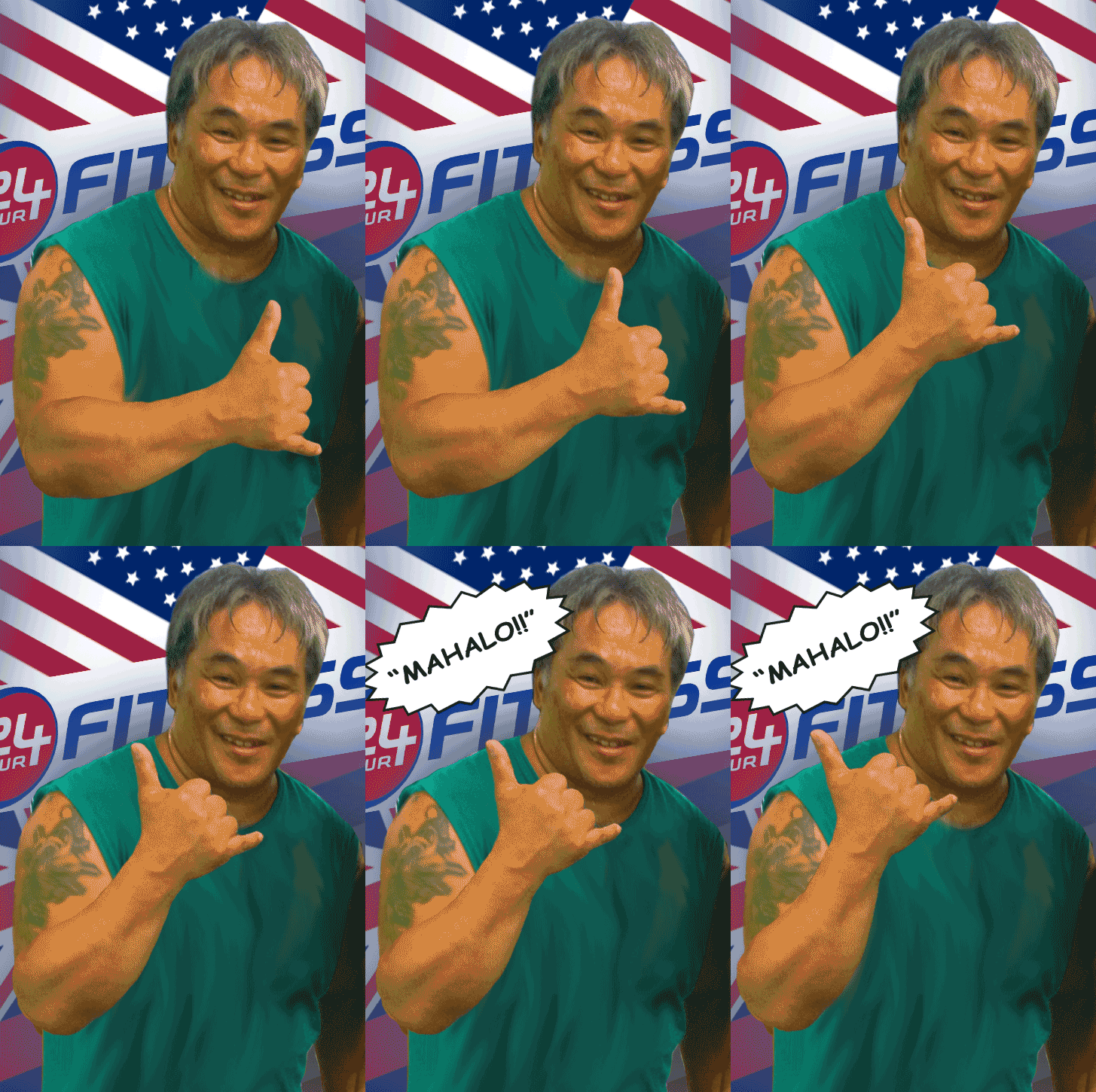 Mindfulness became my lifeline. Discipline replaced motivation. And buried beneath the struggle was something I had almost forgotten — the discipline I learned long ago in military boot camp. The ability to show up when I didn’t feel like it. To follow structure. To trust the process, even when progress was invisible.
I learned how to breathe through discomfort, how to sit with frustration, and how to accept limitations without surrendering to them. But acceptance slowly turned into complacency. I let go of my physical health. Aging crept in. Mobility declined. Back and knee problems compounded the issue. Walking became harder. Strength disappeared. The gym — once my second home — felt like a distant memory.
And yet, something remained.
A memory of who I used to be. A belief that strength isn’t lost — it’s buried. A quiet refusal to let decline be the final chapter.
This is the moment I decided to fight back.
Not recklessly. Not chasing youth. But intelligently, mindfully, and with respect for the body I now inhabit. To rebuild mobility. To restore strength. To protect my spine and knees. To move with purpose again. To become — in a new, wiser way — the gym-rat I once was before surgery.
This fitness journal begins here.
Not at the peak. Not at the bottom. But at the decision point — where awareness, discipline, and action meet.
After back surgery, my life shifted in ways I didn’t fully understand at the time. At 68 the physical pain was real, but the deeper challenge came afterward: learning how to live inside a body that no longer moved the way it once did. Recovery was slow. Confidence faded. Somewhere along the way, depression quietly took hold.
Mindfulness became my lifeline. Discipline replaced motivation. And buried beneath the struggle was something I had almost forgotten — the discipline I learned long ago in military boot camp. The ability to show up when I didn’t feel like it. To follow structure. To trust the process, even when progress was invisible. I learned how to breathe through discomfort, how to sit with frustration, and how to accept limitations without surrendering to them. But acceptance slowly turned into complacency. I let go of my physical health. Aging crept in. Mobility declined. Back and knee problems compounded the issue. Walking became harder. Strength disappeared. The gym — once my second home — felt like a distant memory.
And yet, something remained.
A memory of who I used to be. A belief that strength isn’t lost — it’s buried. A quiet refusal to let decline be the final chapter.
This is the moment I decided to fight back.
Not recklessly. Not chasing youth. But intelligently, mindfully, and with respect for the body I now inhabit. To rebuild mobility. To restore strength. To protect my spine and knees. To move with purpose again. To become — in a new, wiser way — the gym-rat I once was before surgery.
This fitness journal begins here.
Not at the peak. Not at the bottom. But at the decision point — where awareness, discipline, and action meet.
 The year is 2014, and I'm lying in a hospital bed the day after surgery, barely able to move. It’s a tough feeling. I just woke up from lower back surgery, and the pain is intense.
I’ve had back problems for a while, and they have gotten worse over the past five years. The last six months have been especially challenging. After I told my doctor about the pain, I was referred to a spine specialist. He checked my X-rays and found I had spinal stenosis, which means there was pressure on the nerves in my lower back. To fix this, I needed spinal decompression surgery called a laminectomy
What is a laminectomy?
A laminectomy is a surgery where doctors remove part of the spine called the lamina to treat issues like the ones I had in my L3, L4, and L5 disks. The bones they take out look like the ones in the animated GIF to the right.
Why did I need this surgery?
It was to relieve pressure on the nerves in my spine. The spinal canal was narrowing and caused constant lower back pain. This condition is called spinal stenosis.
On permanent disability:
I had back surgery because years of sitting at a desk with poor posture caused damage. I didn’t fully recover, but I could keep working with some restrictions. The State of California approved me for permanent disability. The cartilage between my three lower disks wore away, so the bones rubbed together. If you spend a lot of time at a computer, I recommend getting up and moving every 30 minutes. In Japan, people often do this, and it helps. Try standing while you work or ask for a desk that can be adjusted. It makes a difference.
2025 — The Wake-Up Call
The year is now 2025, and the silence is louder than the pain ever was.
I’m not in a hospital bed this time. I’m standing — or trying to — realizing how much I’ve lost. Walking no longer feels automatic. Stairs require planning. Balance is no longer a given. Every step comes with a question: Am I stable?
This is what dormancy looks like.
Years away from the gym, combined with aging, back damage, and worsening knee problems, quietly erased my mobility. It didn’t happen all at once. It happened gradually, wrapped in reasonable excuses. Until one day, I realized I wasn’t fighting for fitness anymore — I was fighting to walk normally.
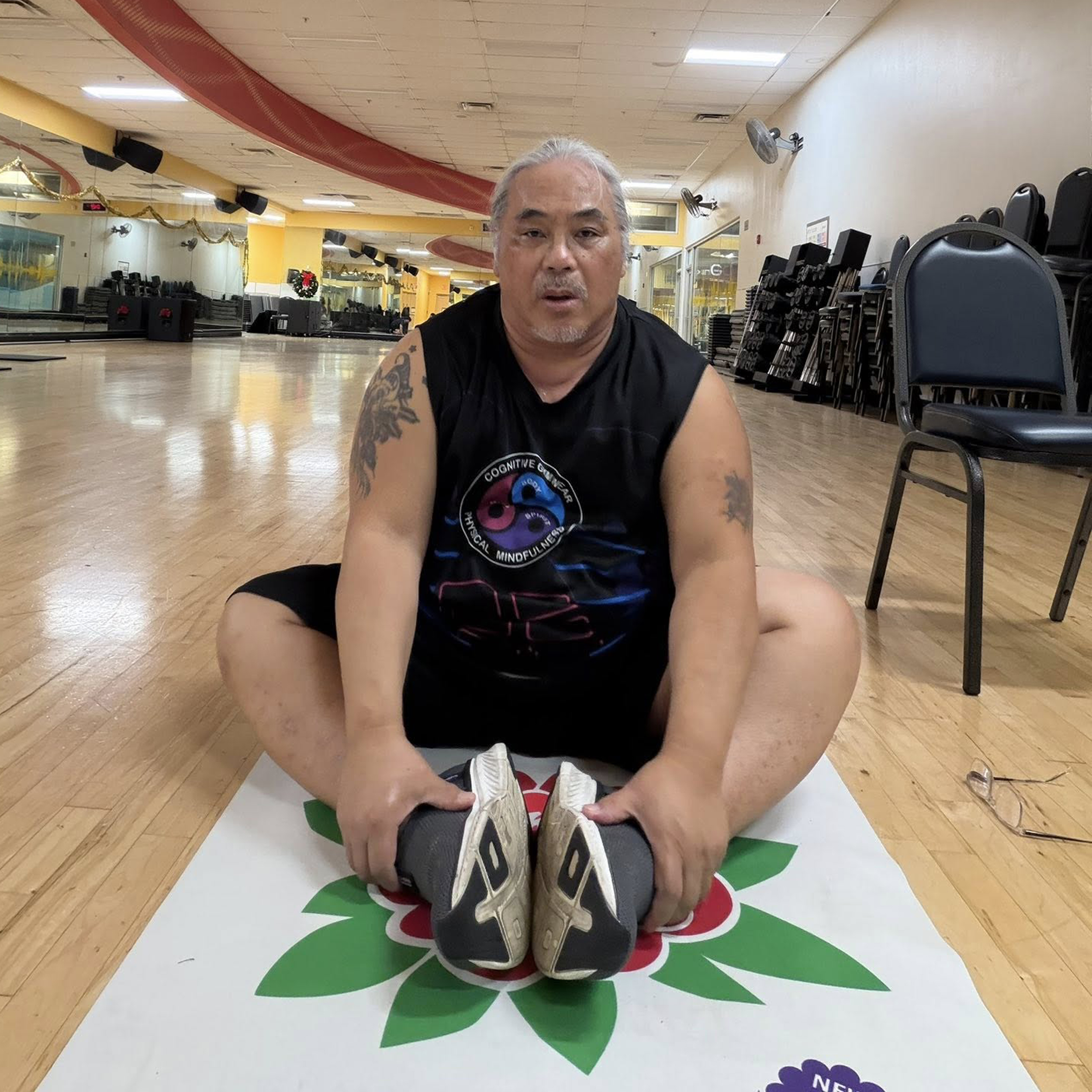 The goal has changed.
This is no longer about aesthetics or chasing numbers. It’s about preserving independence. Moving safely. Climbing stairs without fear. Protecting my spine. Preventing falls. Mobility is now the mission.
Living in Hawaiʻi makes this impossible to ignore. Movement is life here. Balance matters. Strength matters. I don’t want to become fragile by accident.
Before the surgery. Before the pain. Before the long pause, I was a gym-rat. Consistent. Disciplined. Training was part of who I was. That mindset didn’t disappear. It went dormant.
And discipline has a memory.
The same discipline forged in military boot camp. The same discipline that carried me through surgery. The same discipline mindfulness helped me rediscover.
This Is Where the Journal Truly Begins
This is not a comeback story.
It’s a maintenance-of-life story. A fight for mobility story. A discipline-over-motivation story.
From here forward, this journal documents the work:
The exercises that help
The setbacks that teach
The small victories that matter
The data that keeps me honest
The mindfulness that keeps me grounded
I’m not trying to become who I was.
I’m becoming someone stronger — because now, strength has a purpose.
The year is now 2025, and the silence is louder than the pain ever was.
I’m not in a hospital bed this time. I’m standing — or trying to — realizing how much I’ve lost. Walking no longer feels automatic. Stairs require planning. Balance is no longer a given. Every step comes with a question: Am I stable?
This is what dormancy looks like.
Years away from the gym, combined with aging, back damage, and worsening knee problems, quietly erased my mobility. It didn’t happen all at once. It happened gradually, wrapped in reasonable excuses. Until one day, I realized I wasn’t fighting for fitness anymore — I was fighting to walk normally.
The goal has changed.
This is no longer about aesthetics or chasing numbers. It’s about preserving independence. Moving safely. Climbing stairs without fear. Protecting my spine. Preventing falls. Mobility is now the mission.
Living in Hawaiʻi makes this impossible to ignore. Movement is life here. Balance matters. Strength matters. I don’t want to become fragile by accident.
Before the surgery. Before the pain. Before the long pause, I was a gym-rat. Consistent. Disciplined. Training was part of who I was. That mindset didn’t disappear. It went dormant.
And discipline has a memory.
The same discipline forged in military boot camp. The same discipline that carried me through surgery. The same discipline mindfulness helped me rediscover.
This Is Where the Journal Truly Begins
This is not a comeback story.
It’s a maintenance-of-life story. A fight for mobility story. A discipline-over-motivation story.
From here forward, this journal documents the work:
The exercises that help
The setbacks that teach
The small victories that matter
The data that keeps me honest
The mindfulness that keeps me grounded
I’m not trying to become who I was.
I’m becoming someone stronger — because now, strength has a purpose.
Oct
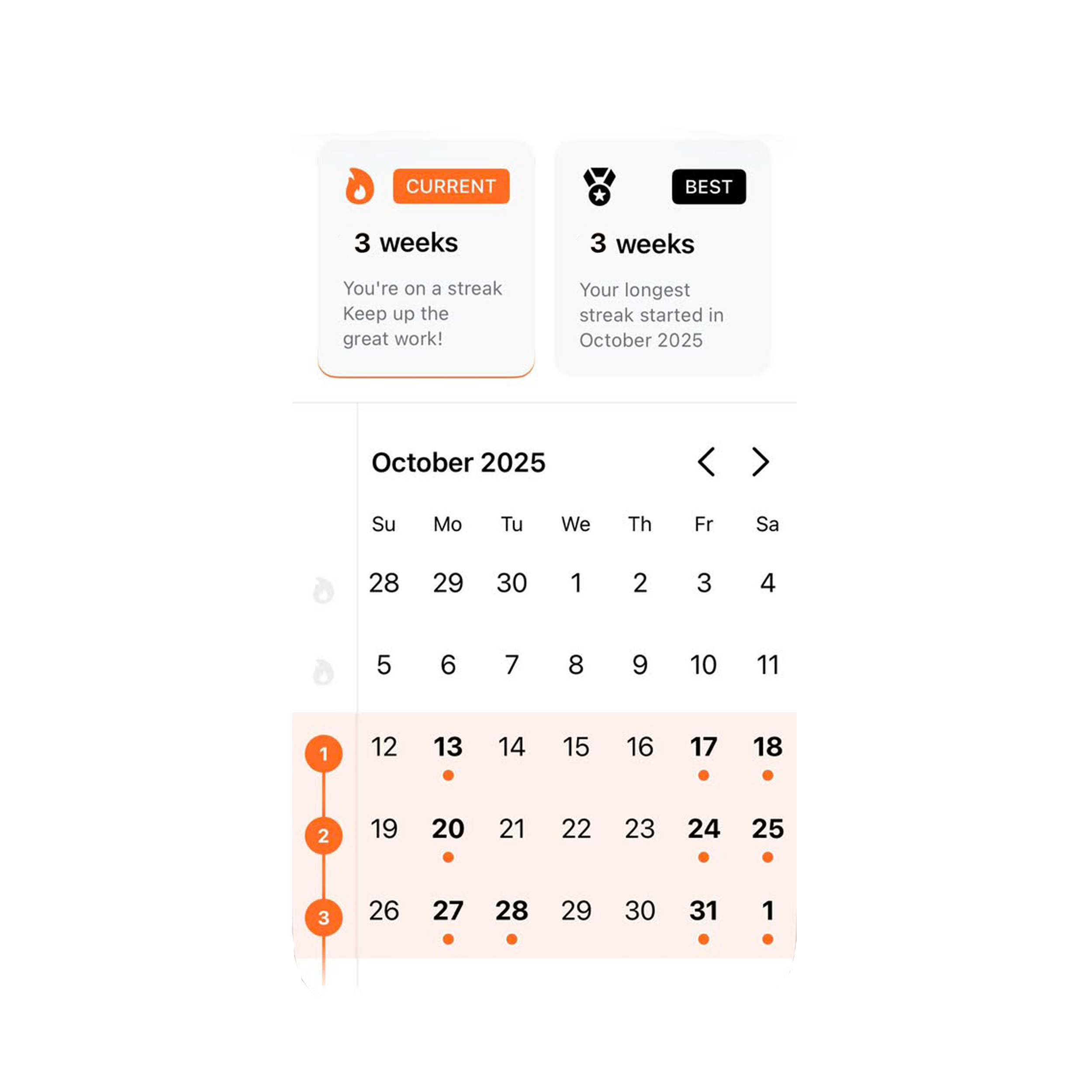
Nov
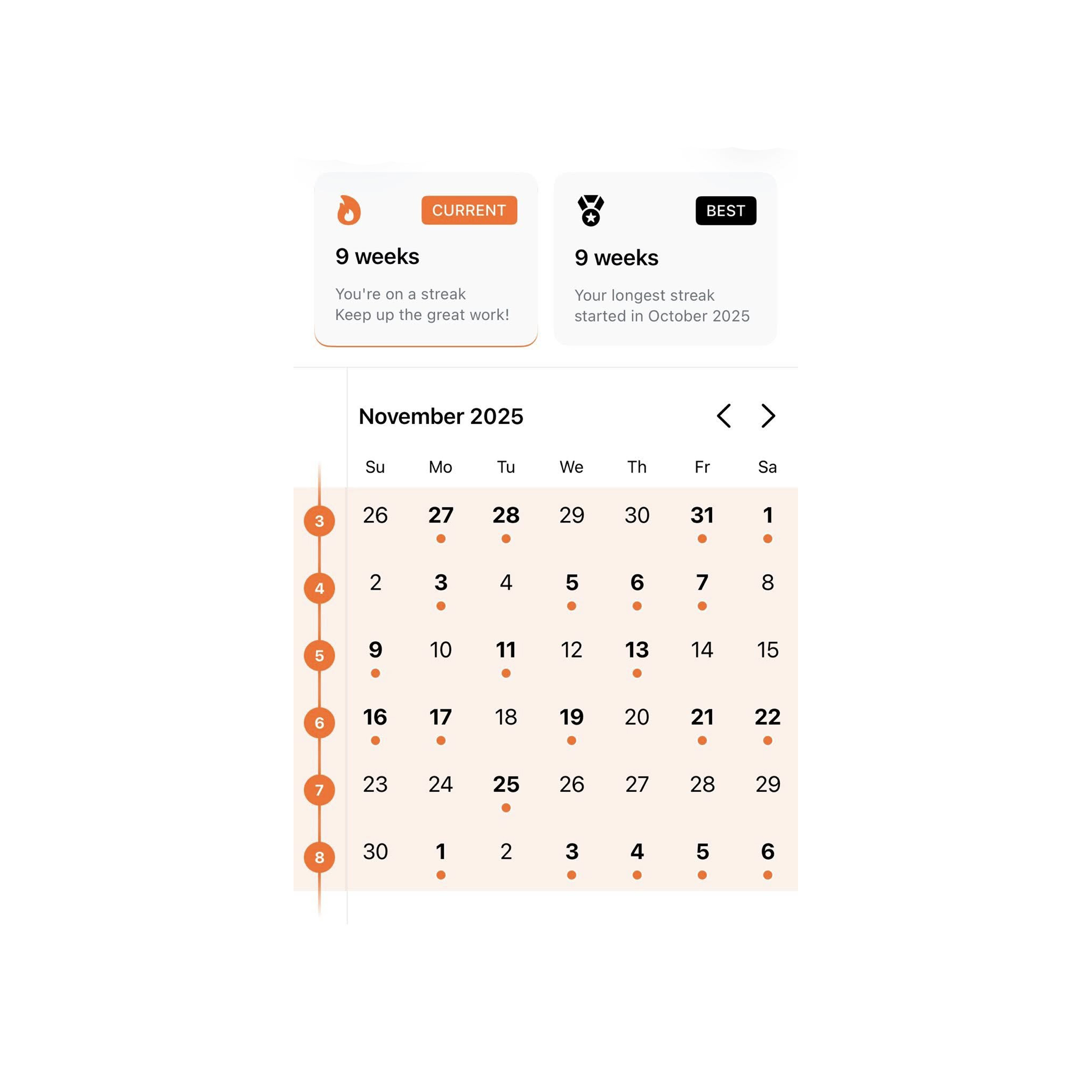
Dec
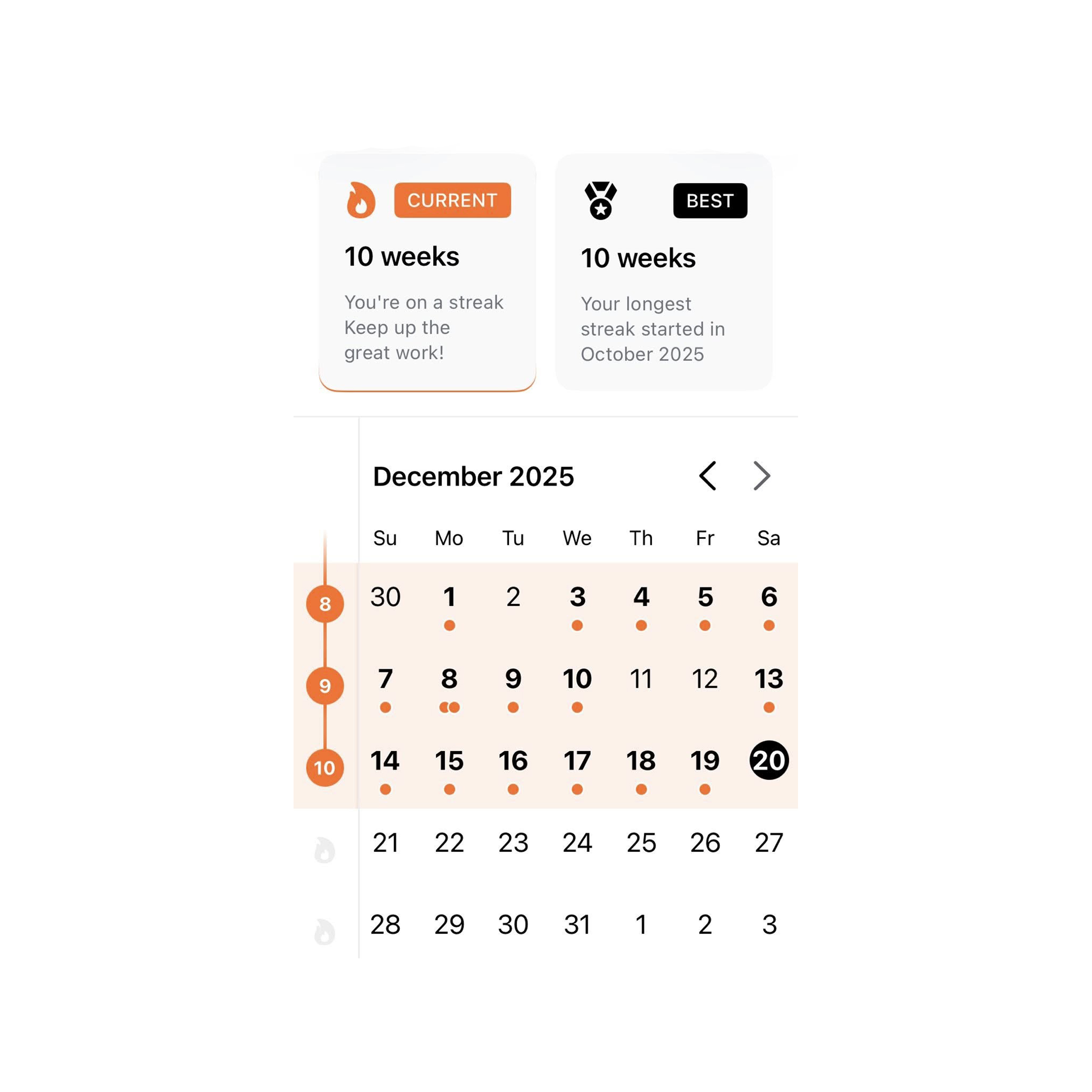
2026: The Year of Resilient Consistency
Now it’s 2026. The last months of 2025 were quiet but intentional, a time to reset, listen, and lay down a solid foundation.
This is the year to focus on consistency and rebuilding.
I train with mindfulness now, paying attention instead of rushing. When I focus on performance, I bring structure, discipline, and purpose. My time in the military taught me to stay focused and accountable. Martial arts taught me patience, balance, and how to push past limits without forcing it.
In 2026, I measure progress by quality, control, and how sustainable it is. Every movement is intentional. Each session helps me grow stronger. I build strength through repetition, recovery, and respecting my body.
I’m not chasing intensity or trying to relive the past. I want to move better, live stronger, and keep my independence.
This is the year I make resilience a daily habit: staying calm, acting with discipline, and making steady progress.
Now it’s 2026. The last months of 2025 were quiet but intentional, a time to reset, listen, and lay down a solid foundation.
This is the year to focus on consistency and rebuilding.
I train with mindfulness now, paying attention instead of rushing. When I focus on performance, I bring structure, discipline, and purpose. My time in the military taught me to stay focused and accountable. Martial arts taught me patience, balance, and how to push past limits without forcing it.
In 2026, I measure progress by quality, control, and how sustainable it is. Every movement is intentional. Each session helps me grow stronger. I build strength through repetition, recovery, and respecting my body.
I’m not chasing intensity or trying to relive the past. I want to move better, live stronger, and keep my independence.
This is the year I make resilience a daily habit: staying calm, acting with discipline, and making steady progress.
Jan
Feb